

Why We Don’t Choose Finishes in Isolation
When designing their own space, clients occasionally come to us with a very specific request:
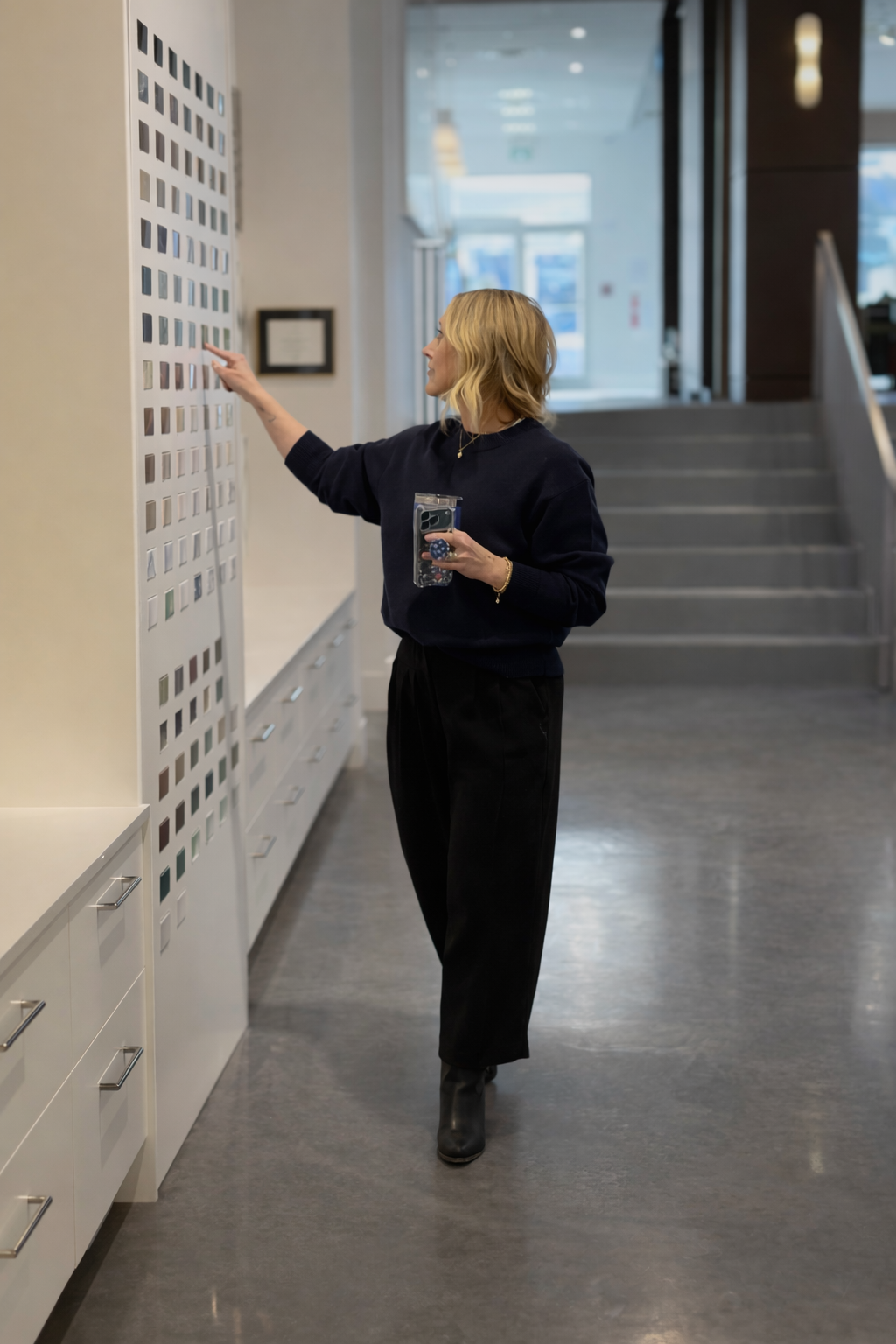
“I just want to update my fireplace tile,” or “I only need help choosing a new rug.”
On the surface these requests make complete sense because small changes can feel like an easy way to refresh a space.
However, from a professional design perspective, no element exists on its own. A new tile, rug, or finish doesn’t live in isolation - it interacts with the surrounding materials, colours, lighting and proportions of the entire space. That’s why we never make a single selection without first understanding the full context.
Even when the scope feels small, we always step back and look at the whole picture to ensure the final result feels intentional, cohesive, and well-balanced, not accidental.
The Problem with Choosing Finishes One by One
A material can look stunning on its own and still fail in the context of the full space.
A tile might be the perfect color.
A countertop might have beautiful movement.
A wood tone might feel warm and inviting.
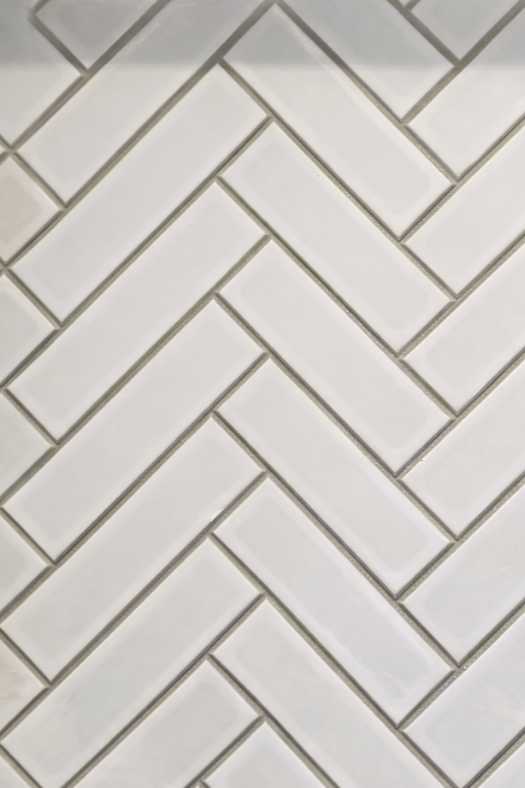
For example: we were looking for a more neutral tile - something timeless, clean, and versatile for a new project. At first glance, this option seemed perfect. A classic white tone, an elegant shape, and a pattern that feels both subtle and refined.
On its own, the tile checks all the boxes. But as with any finish, its true potential only becomes clear when it’s evaluated in context.
But when these elements are combined without considering their relationship to one another, the result can feel unbalanced: too warm, too cold, too busy or simply “off” (even if every individual choice is technically good). Design issues caused by isolated selections often include:
Competing undertones
Colours that read differently once paired with other finishes
Inconsistent textures
A space that feels trendy rather than timeless
These problems are rarely obvious at the beginning, but they become very clear once everything is installed, when changes are expensive or even impossible. In well-designed spaces finishes are selected together, not separately.
This allows us to control:
Color balance – how warm and cool tones interact
Texture contrast – mixing smooth, matte, natural, and reflective surfaces intentionally
Material temperature – ensuring the space feels inviting, not flat or harsh
Overall harmony – creating flow instead of visual noise
Every finish has a role. Some are meant to stand out, others to support. When everything tries to be the star, nothing truly shines.
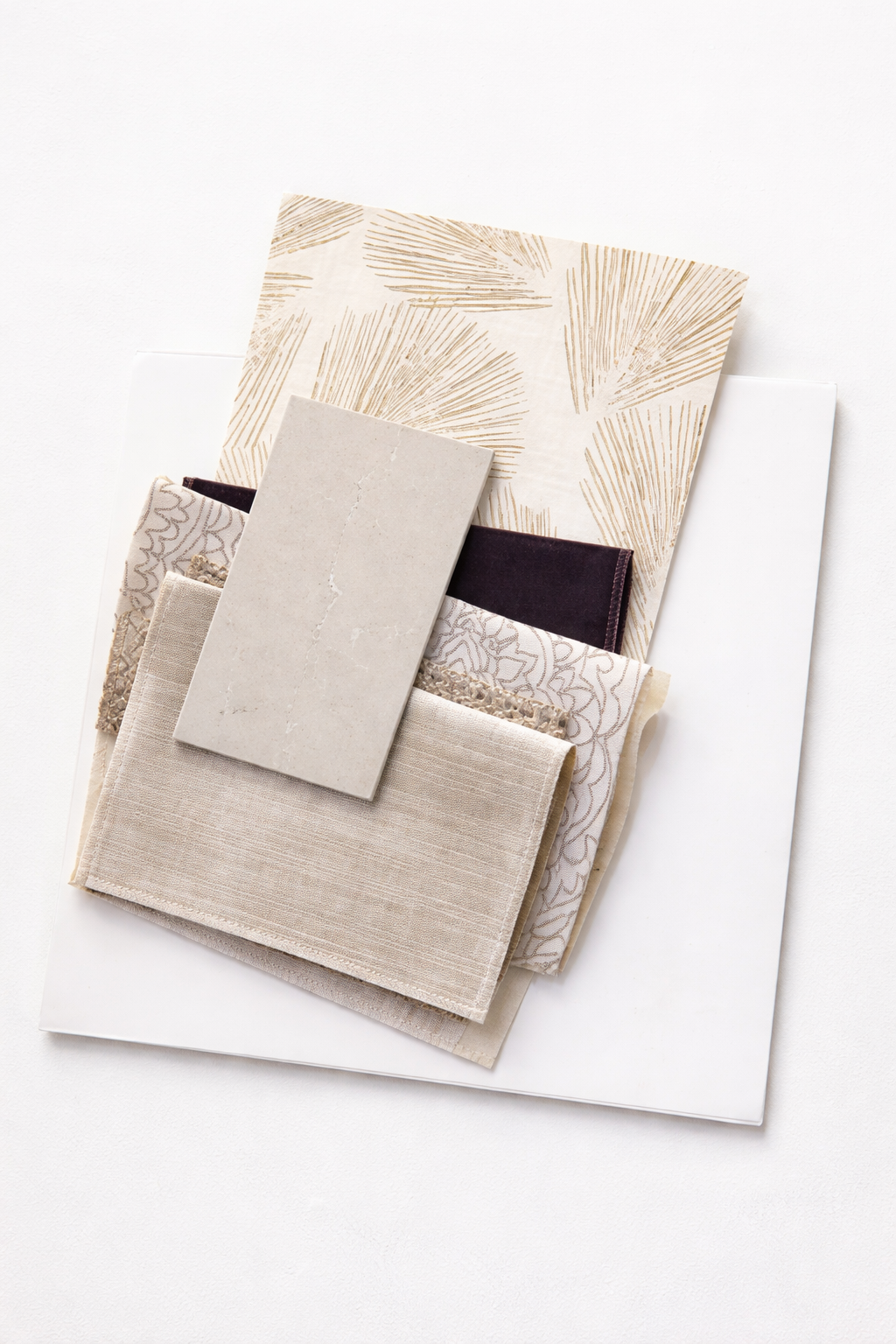
For context, this is the material palette we selected for our new project, which must be considered alongside the tile selection!
Context Is Everything
A finish doesn’t exist on its own — it lives within:
The lighting (natural and artificial)
The scale of the space
Adjacent materials
Furniture and architectural details
This is why we always review finishes together, often alongside mood boards. Seeing materials in context allows us to anticipate how they’ll interact before decisions are finalized.
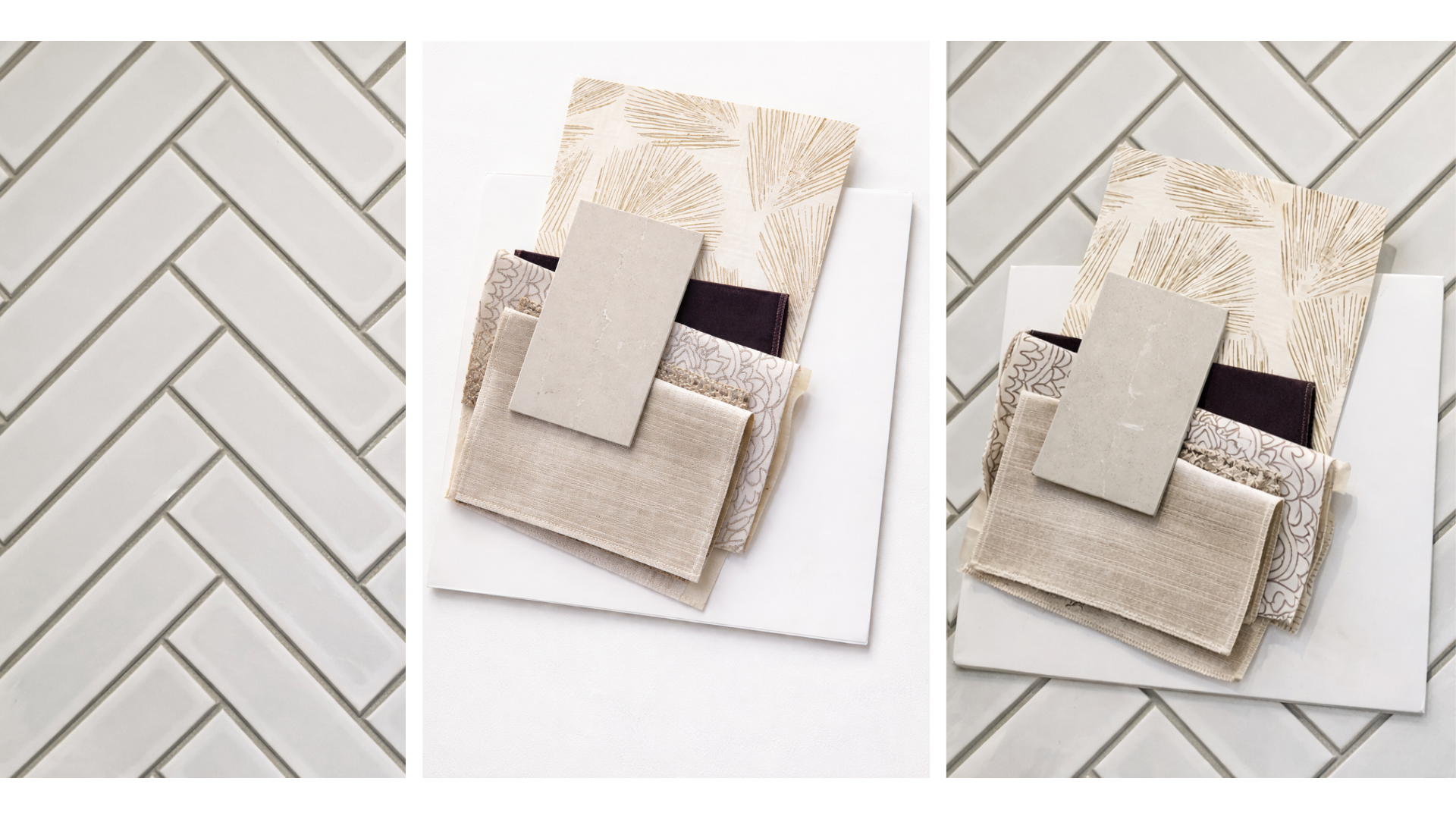
As you can see in the image above, after placing the tile alongside the full material selection for this room, its undertone became much clearer. While it initially appeared neutral, the tile reads slightly too warm once paired with the surrounding finishes, making the white paint feel cooler than intended for this project.
This shift only becomes evident when materials are evaluated together, and it’s exactly why we always review finishes as a complete system, not in isolation.Have we hammered home our point yet?!
The Result: Cohesive, Intentional Spaces
When finishes are chosen as a system, the final space feels intentional rather than accidental, calm rather than visually noisy and timeless rather than overly trendy. The goal isn’t to find one “perfect” finish, but to create a thoughtful conversation between materials that supports the overall design. Great design is not about individual elements, it’s about how everything works together. That’s why we don’t choose finishes in isolation. We design them as part of a complete, well-balanced whole.
Design decisions shouldn’t be made in isolation and neither should your project.
Because of this approach, our work is best suited to full-scope projects rather than isolated selections. We believe great design happens when every decision is made in conversation with the rest of the space, allowing the end result to feel cohesive rather than piecemeal.
If you’re planning a renovation or new space and want a cohesive, intentional result, we’d love to help. Contact us!